
Unfabled’s New Creatine Superblend Shows How Creatine Is Going Mainstream for Women
Blog post Unfabled’s new Creatine Superblend is another sign that creatine for women is going mainstream. Here’s who Unfabled are, why creatine now, and what the science actually says.
CREATINE INSIGHTSCREATINE PRODUCT NEWS
Jamie Coles
3/28/20266 min read
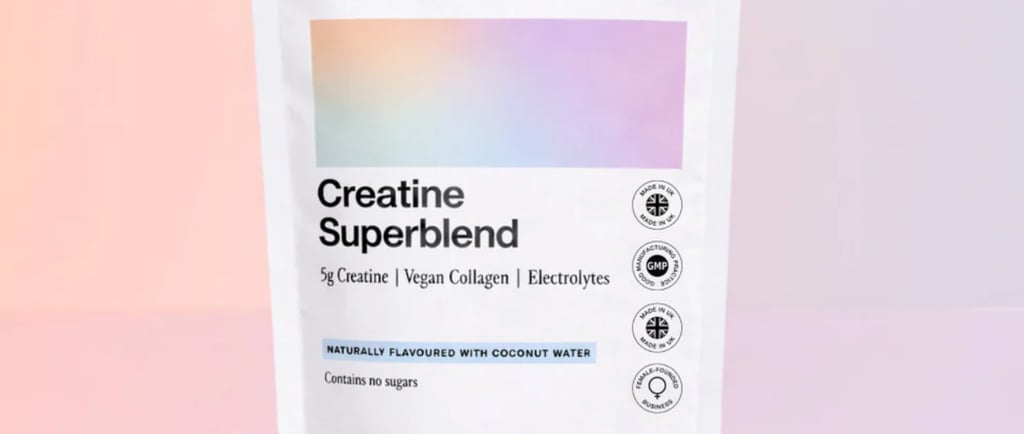
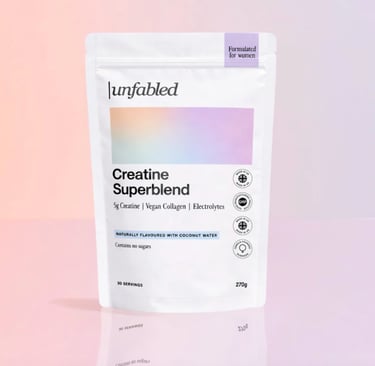
For years, creatine was boxed into one narrow category: gym bros, bulking cycles, and old-school sports nutrition. But that positioning is changing fast — and Unfabled’s new Creatine Superblend is a good example of why.
Finally, a women-first wellness brand has stepped into performance nutrition and explicitly framing creatine around energy, focus, hydration, and whole-body strength, not just muscle gain. That matters, because it reflects a broader shift: creatine is increasingly being discussed as a supplement for women, not just lifters.
Who are Unfabled?
Unfabled started as a response to gaps in menstrual and hormonal wellbeing. On its official “Our Story” page, founder Hannah says she was frustrated by the lack of a single place to find quality products for symptoms, general wellbeing, and women’s health. The company says it has since grown into a “one-stop shop for all things menstrual and hormonal wellbeing,” spanning fertility, post-partum, menopause, PCOS, and endometriosis.
That positioning is important. Unfabled is not a legacy sports supplement company trying to pink-wash creatine. It is a women’s health brand moving into creatine from a hormonal-health and symptom-support angle. On its homepage, Unfabled describes itself as “community-led, clinically trusted,” and says it aims to simplify women’s health by curating solutions people can trust.
The company has also built Unfabled Labs, which it describes as a consumer-insight and research platform powered by more than 10 million data points and feedback from its direct-to-consumer community of women and non-binary individuals. Unfabled says this helps it identify “white spaces” and unmet needs in women’s health.
What is Unfabled’s Creatine Superblend?
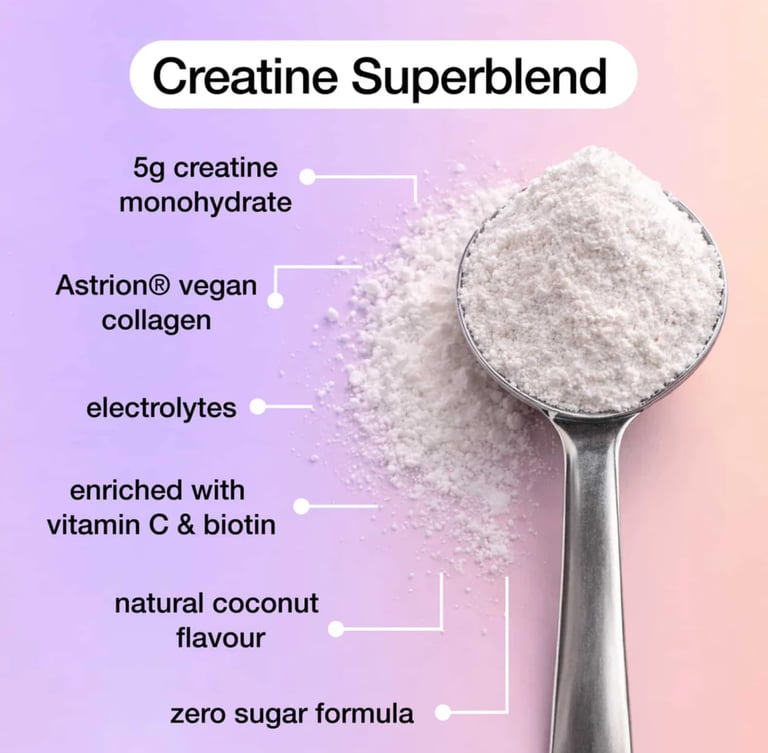
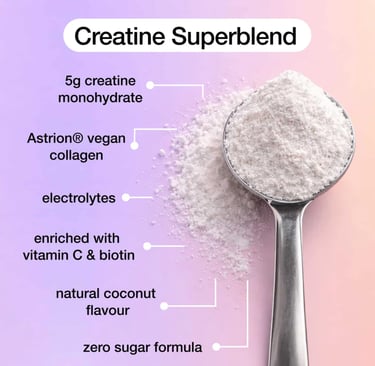
The new product is called Unfabled Creatine Superblend. According to the official product page, it costs £32.99 for 30 servings and each 9 g serving provides 5 g creatine monohydrate, plus an electrolyte complex and Astrion® Vegan Collagen Builder. It is marketed as zero sugar, coconut-water flavoured, vegan-friendly, and made in the UK.
Unfabled says the formula is designed to support mental clarity, strength, and hydration, and explicitly describes the blend as “designed with women’s physiology in mind.” The product page also says creatine is “increasingly recognised” for its role in muscle strength, energy levels, and cognitive performance in women.
That last part is the real story. The product itself is interesting, but the more important development is the positioning: this is creatine being reframed as a women’s wellness supplement rather than a niche bodybuilding ingredient.
Why creatine — and why now?
Unfabled gives two useful clues on its own site. First, it says community research found that 58% of respondents experienced low or inconsistent energy, and 30% had heard of creatine but were not sure how or why to use it. Second, it says that with “emerging research” highlighting benefits for women, it wanted to rethink creatine specifically for women’s needs.


That lines up with the wider science. A 2021 review in Nutrients argued that creatine may be especially relevant across the female lifespan because hormone-related changes affect creatine kinetics and phosphocreatine resynthesis. The review concluded that creatine supplementation in pre-menopausal women appears effective for strength and exercise performance, and may also have potential benefits for mood, cognition, and bone health, particularly in specific life stages such as post-partum and menopause.
A 2024 narrative review also noted that women typically have lower baseline intramuscular creatine stores, and suggested supplementation may help with fatigue-related symptoms, especially around certain phases of the menstrual cycle. The authors also concluded that creatine monohydrate remains the preferred form of supplementation.
So the timing makes sense. The science around women and creatine is still developing, but there is now enough evidence — and enough public awareness — for brands outside traditional sports nutrition to feel comfortable launching women-targeted creatine products.
What does the science actually say about creatine for women?
This is where the conversation needs a bit of nuance.
The strongest evidence is still around muscle energy and performance. Creatine helps replenish phosphocreatine, which supports rapid ATP production during repeated high-intensity efforts. That is the classic reason it has been used in sport for decades.
But women-specific research is now looking beyond the gym. Recent reviews suggest creatine may have a role in:
Strength and training performance, especially when combined with resistance training.
Bone and muscle health, particularly in older women when paired with exercise.
Mood and cognition, potentially because creatine supports brain energy metabolism.
Fatigue and energy support, especially where baseline stores may be lower.
This becomes particularly relevant around and after menopause, when maintaining muscle, strength and bone health becomes increasingly important. We’ve examined the research on creatine and healthy ageing—including the evidence in postmenopausal women—in more detail here.
At the same time, it is worth being honest about what we do not know. A 2025 systematic review on active females found the athletic-performance evidence is still mixed and limited by a relatively small, heterogeneous study base. In other words, the hype has accelerated faster than the women-specific performance data in some areas.
That does not mean creatine is overhyped. It means the best article angle is not “women’s creatine is the next miracle supplement.” It is: creatine is becoming more relevant to women because the science is broadening, the stigma is fading, and brands are finally speaking to women directly.
Is a women-specific creatine product actually necessary?
Not always.
From a pure supplementation standpoint, plain creatine monohydrate is still the most researched and usually the best-value option. That is one reason we consistently track it in the Creatine Price Index. If someone simply wants an effective daily creatine supplement, a standard monohydrate powder is often enough.
Where products like Unfabled’s can make sense is format, positioning, and convenience. Some women do not want a big bag of unflavoured powder from a bodybuilding brand. They may prefer a supplement framed around energy, focus, hydration, and overall wellbeing, especially if it feels more aligned with how they already shop for health products. Unfabled is clearly leaning into that reality.
That said, extras like collagen builders, electrolytes, biotin, or flavour systems also change the economics. You are no longer comparing pure creatine to pure creatine. You are comparing a broader wellness blend. That is not automatically bad — but it does make price-per-gram and ingredient transparency more important. This is exactly the kind of situation where checking our Creatine Price Index alongside a product launch becomes useful.


Why this launch matters for the broader market
The real significance of Unfabled’s launch is cultural as much as nutritional.
A women’s health brand with roots in menstrual and hormonal wellbeing is now treating creatine as a normal, everyday support supplement. Not a masculine niche product. Not something reserved for powerlifters. Just part of a wider conversation about energy, strength, focus, recovery, and feeling better in your body.
That shift is likely to continue. As more brands target women with creatine messaging — especially around life stages like menstruation, post-partum, and menopause — the market will probably split into two tracks:
Plain monohydrate for value-first buyers
Women-focused blends for convenience, positioning, and lifestyle fit
That creates opportunity, but also confusion. Which is why editorial coverage needs to stay grounded in science rather than trend-chasing.
Final take
Yes, Unfabled’s Creatine Superblend is interesting. But the bigger story is not the tub itself. It is what the launch represents.
Unfabled is a women’s wellness brand built around menstrual and hormonal health, community research, and women-first product design. Its move into creatine signals that creatine is no longer being treated as a niche “gym supplement.” It is being repositioned as a mainstream women’s health and performance supplement — and the research base is finally broad enough to make that conversation credible, even if some questions remain.
If you are interested in the category, the practical next step is not to buy the first women-branded creatine you see. It is to understand what form you need, what dose makes sense, and what you are actually paying for.
That is where our Creatine Dosage Calculator and Creatine Price Index come in.
Contact
Questions? Reach out anytime!
info@creatineinsider.com
© 2026. All rights reserved.